Her grandmother’s breath still runs the household.
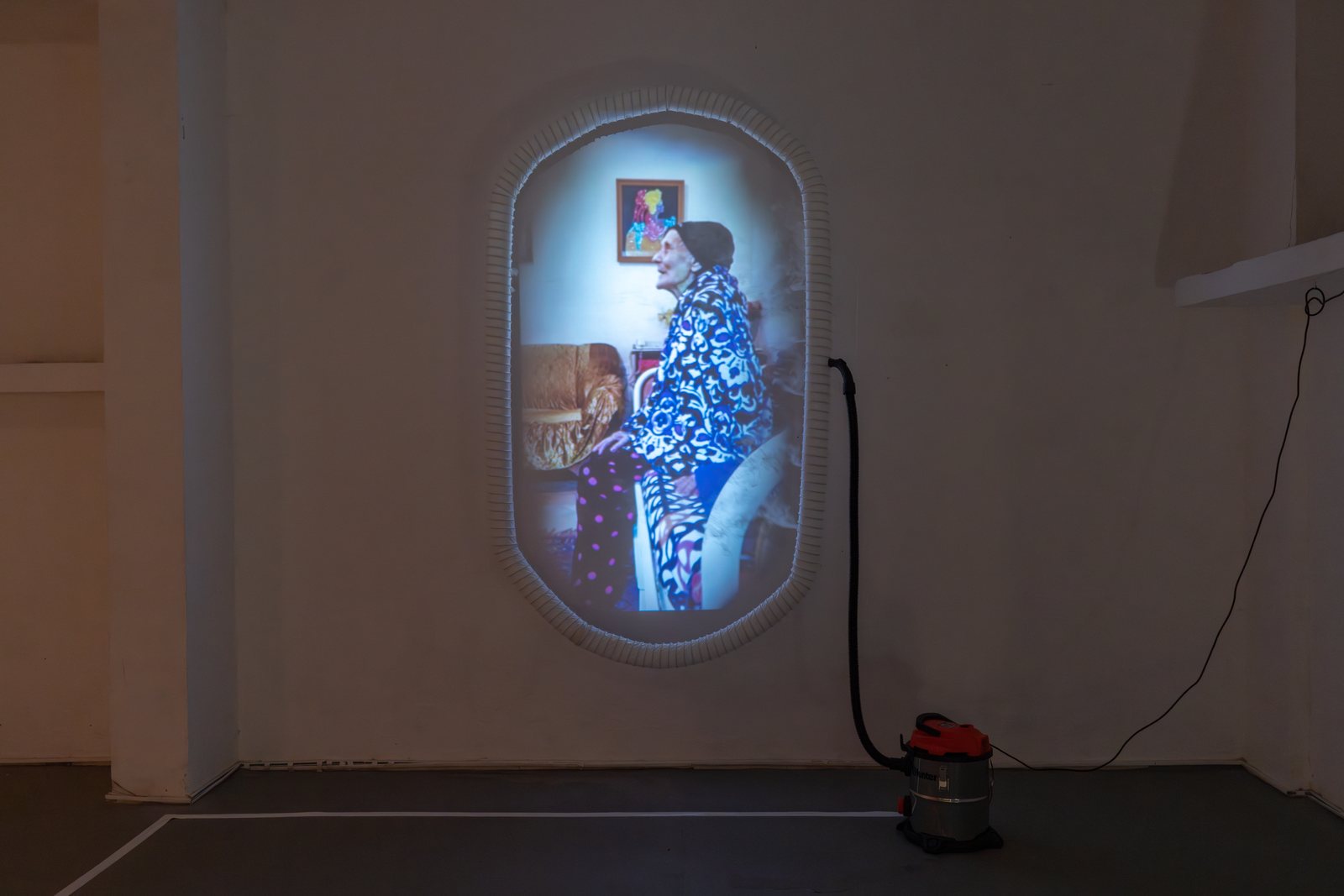
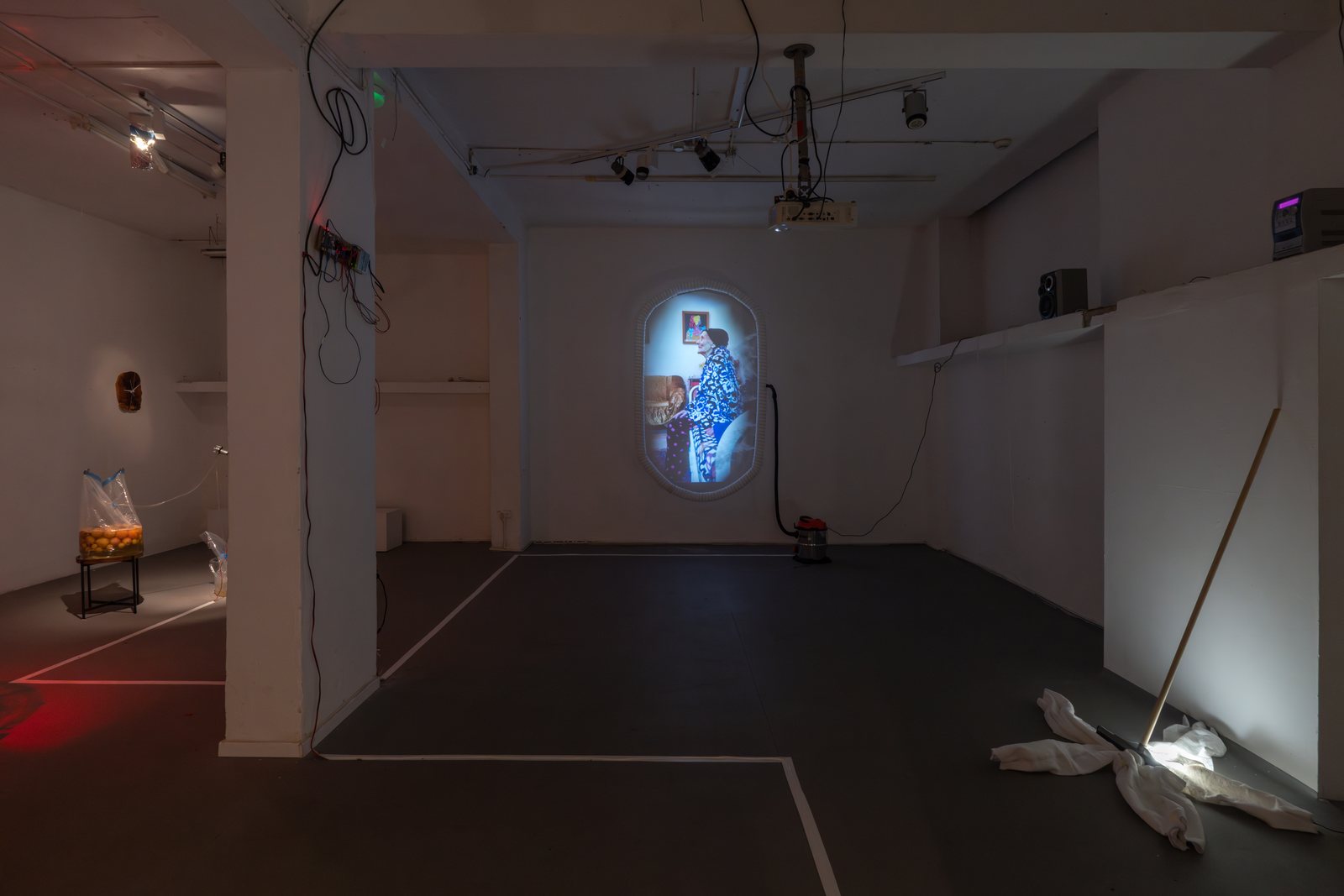
A phone recording of the artist’s late grandmother singing Maoz Tzur drives every device in the room. Her breath is tracked. A vacuum cleaner, used for its exhaust, feeds a vapour generator connected to the ring of white ducting that encircles the projection; while she sings, vapour issues from slits along the duct, and the video of her face is thrown onto the vapour itself. When she chokes and runs out of air, the vapour falters and stops, and the figure she is made of disperses with it.
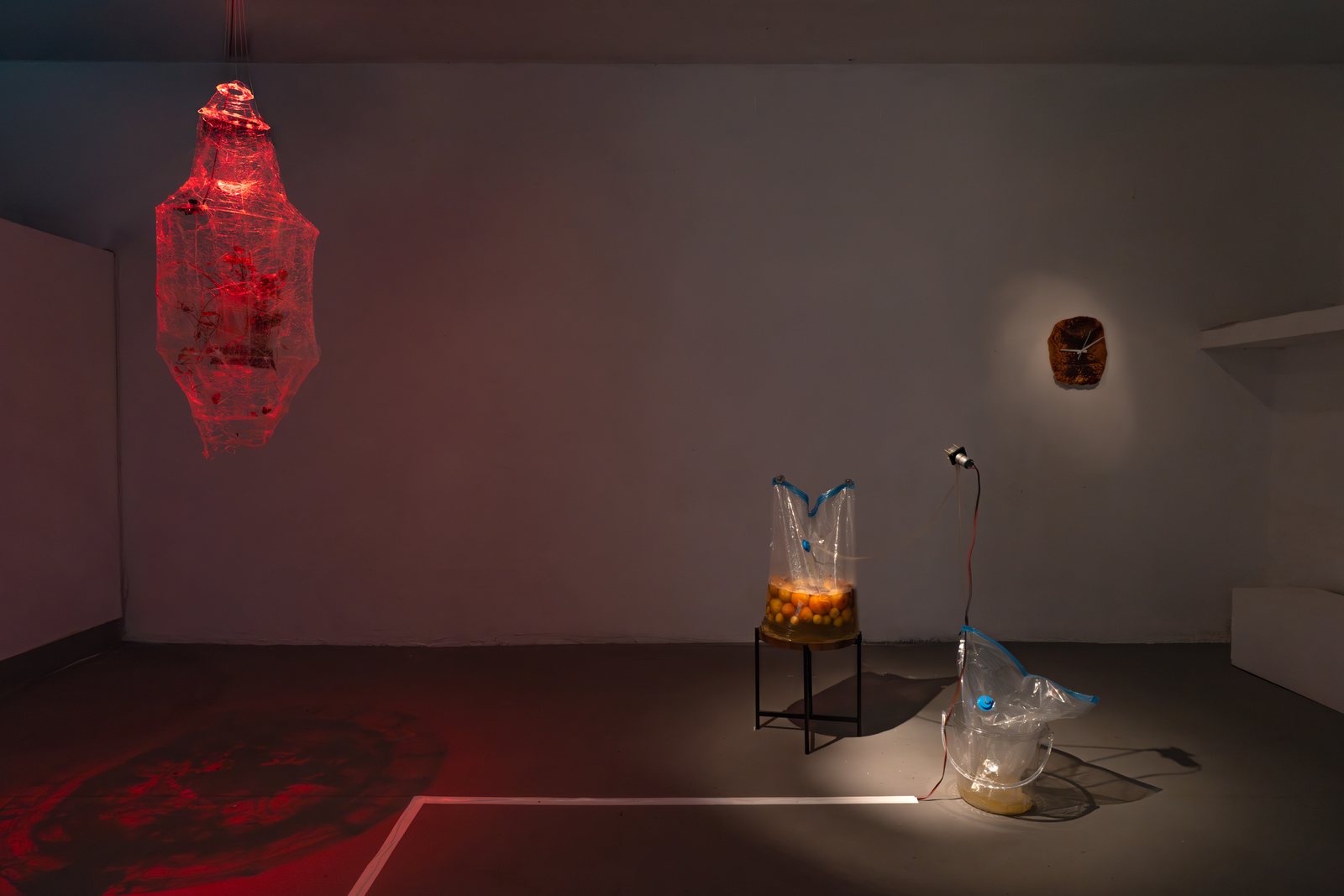
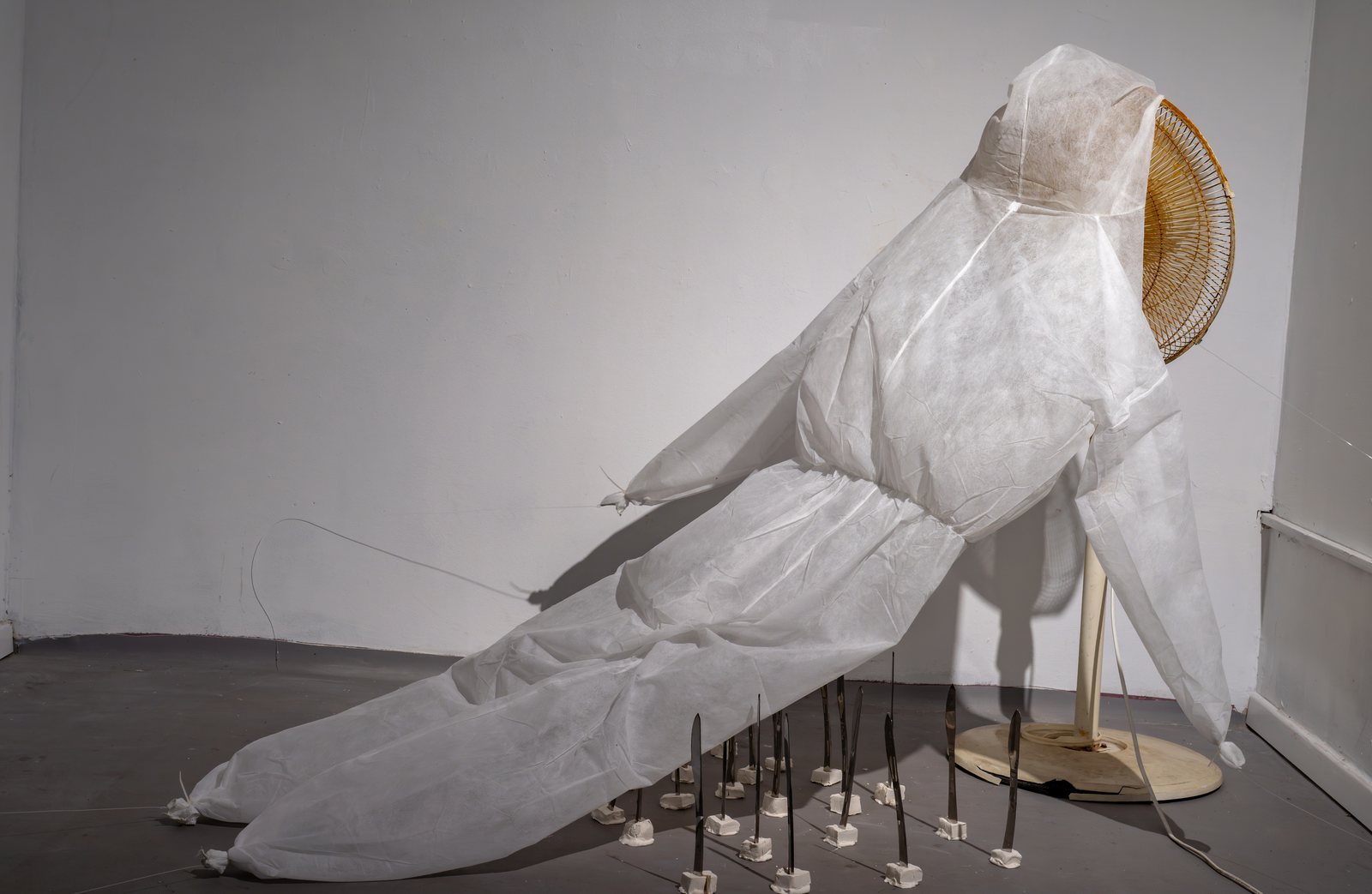
A pump draws liquid between two bags of fruit at the rhythm of her breathing. The fan that lifts a painter’s coverall above a field of knives set in plaster runs while she sings, stops when she falls silent, and stutters while she gasps. In the recording, when she goes quiet, another voice — present but never in frame — says nu, nu to make her go on.
A second circuit runs in the same room and never touches the first. A potato plant the artist grew hangs inside a red-lit wire cage, suspended in a bag of water and fertiliser, with two biosensors attached to it — one to a leaf, one to a root. Its electrical pulses are read as pitch, and the instrument retunes itself continuously to whatever range the plant has produced. Each pulse releases a recorded human sigh: tiredness, relief, alarm, weeping, an eye-roll, laughter. One breath in the room is a recording of someone who has died; the other is a living thing that has never spoken.
The room is assembled from what she left. The fruit is the kind she served; she was of Moroccan origin. A dried frena bread turns on clock hands that carry no numbers and announce no hour. A squeegee and a floor-rag stand against the wall. Nothing is performed. The system runs on its own, and the household it reconstructs continues without anyone present to maintain it.