The sun is broadcast live from orbit, and a machine turns it into organ music.
Software receives the live close-up feed of the sun broadcast in real time from NASA's SDO observatory, launched in 2010. It reads the frequencies of the solar rays, the oscillations of the surface, and the position of the sun relative to the earth, and composes from them a score, played on a digital replica of a pipe organ — the instrument built in 1989 by Grönlunds Orgelbyggeri AB for the Piteå School of Music in Sweden. The composition is written by a neural network trained on classical scores; it has never stopped.
The sun's position sets the tempo. The frequencies emitted set the pitch. What results is a kind of sundial that keeps time without ever announcing an hour. The learning is automatic and so is the sound — produced without a body, and still carrying legible human traces.
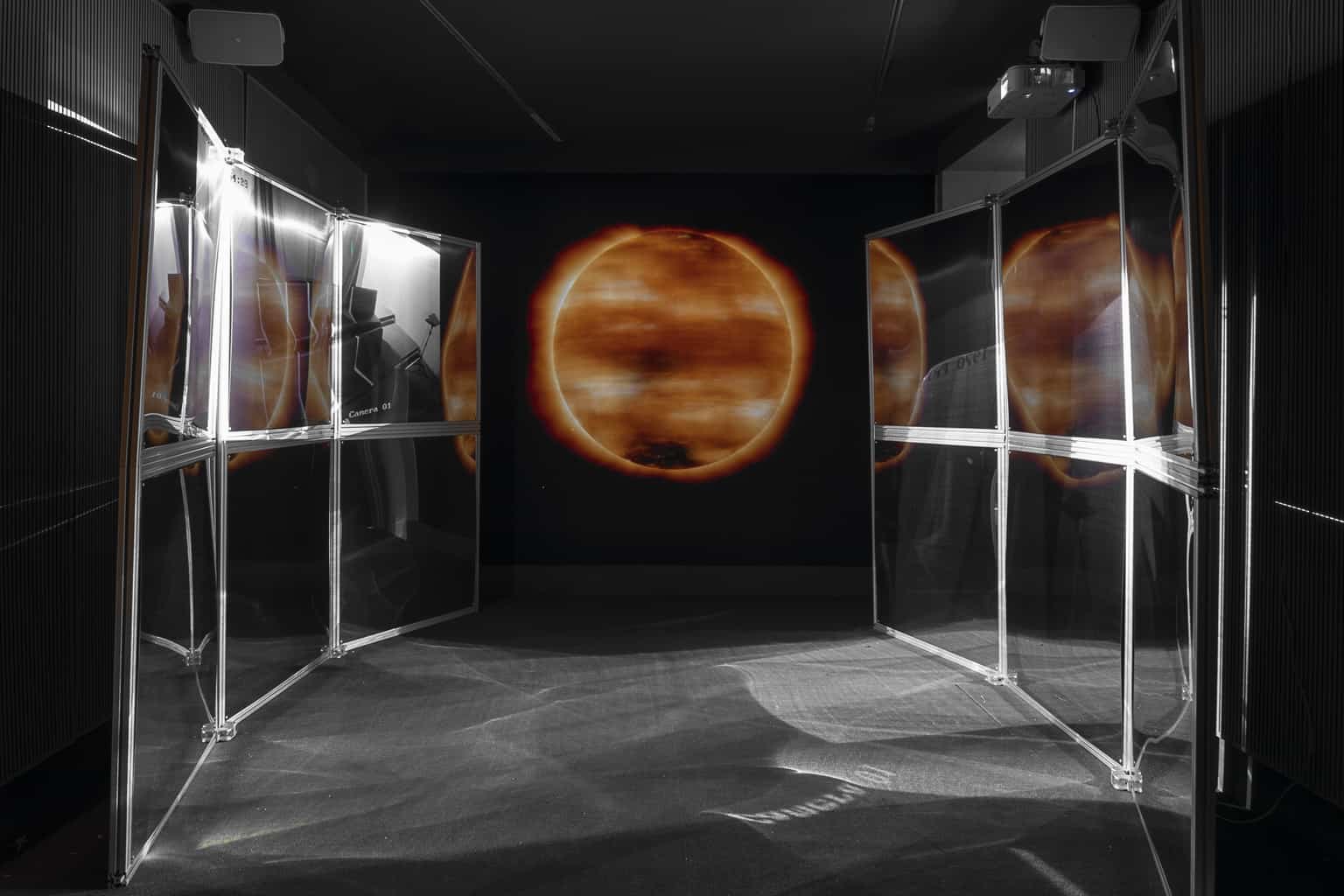
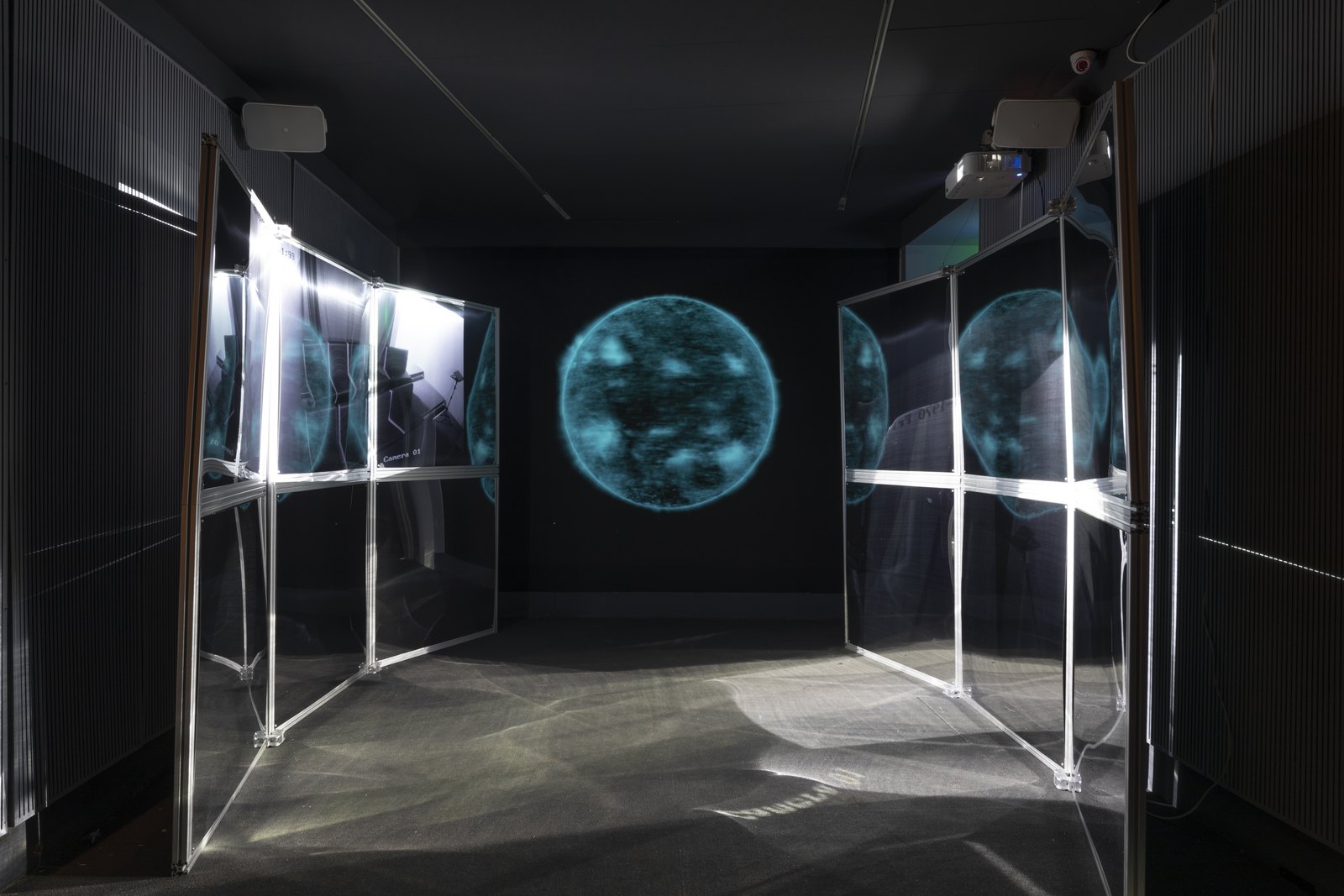
The room is dark and its walls are black. The sun is thrown onto the far wall, and two freestanding folding mirrors stand along either side of the space, set in shallow zigzags, so the sun is returned into the room again and again, in fragments, at angles it was never projected at. Nothing is concealed: the projectors, their cables and the plinth stay in view. The image cycles through its palettes, so the same room is red, then cyan, then deep blue.